
Despite the considerable hindrance to shipping that the lower reaches of the Yarra River presented, it was not until the Melbourne Harbour Trust was formed in 1877 that major improvements were made to the port facilities.
The Trust appointed Joseph Brady as Resident Engineer.
British engineer Sir John Coode was commissioned to design a canal and associated docking facilities. Coode came to Melbourne in 1878 to inspect the area, and his plans and reports were submitted in January 1879. The canal would not only allow a better passage for floodwaters, but it would prevent damage to wharf assets along the banks of the river. The soil excavated was to be used to raise the level of the ground surrounding the dock.
Work was commenced in 1880.
The Yarra was deepened and cleared of obstructions, and Coode Canal was excavated to eliminate the tight curve of the river at the lower reach.
It was opened in 1886.
Brady was not satisfied with the huge cost of the project, nor the size of the dock. Larger vessels were already beginning to appear, so instead of the smaller Dock No 1 being commenced, Brady had the Trust combine the two smaller docks into one.
He also reduced the depth of the dredging suggested by Coode.
Excavation of Victoria Dock commenced in 1888.
Water was let into the dock in March 1892, and the first ship was berthed in 1893.
Over the years deepening the channels and widening the river and the docks continued.
This plan reveals how little had been achieved in draining the swamp since Alexander Kennedy Smith’s proposal made 15 years earlier. The drains are laid out differently, with a pumping station to help them along, and there is a proposal for a new embankment along the railway.

Sketch plan showing proposed reclamation of Batmans Swamp as recommended by the Royal Commission on the Low Lying Lands on the Yarra, O Fenwick, Chairman, G A Mouritz, Secretary, Government Printing Office, Melbourne, 7-11-1873. Royal Historical Society of Victoria Collection
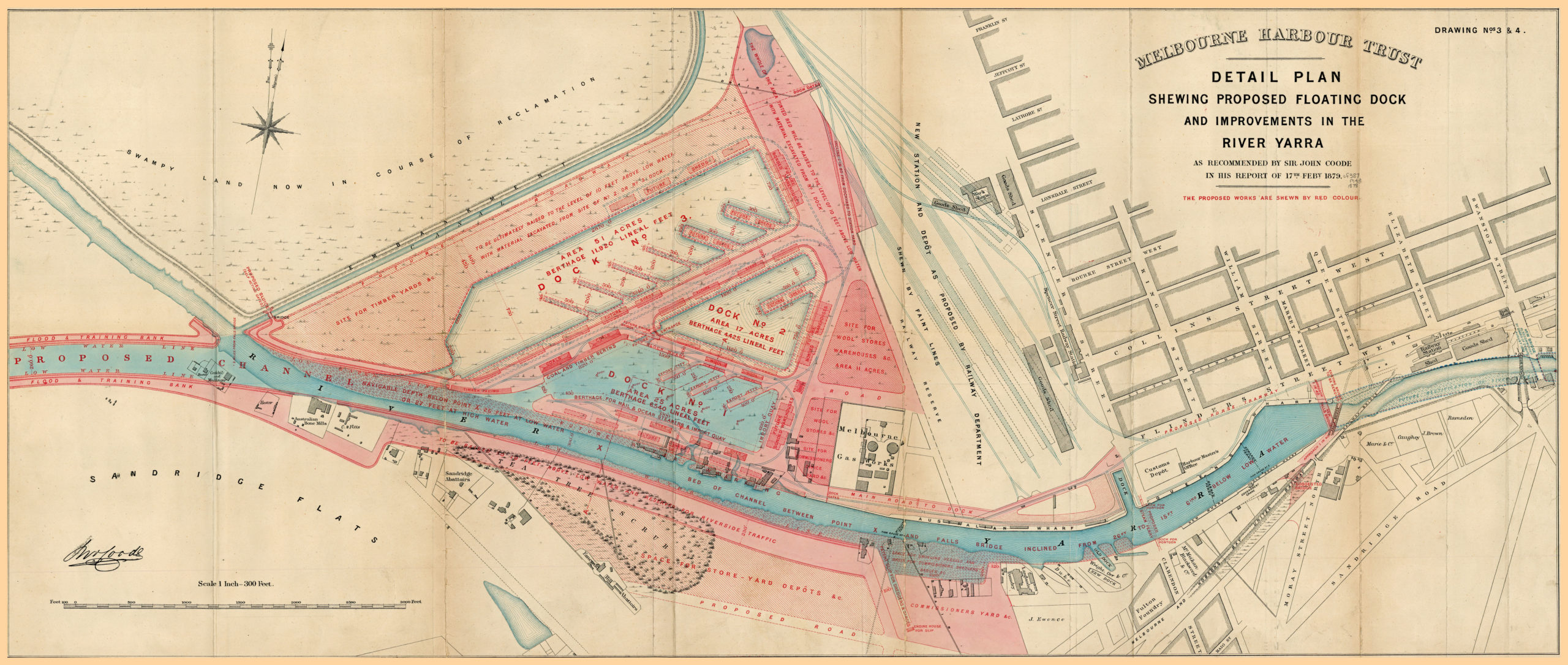
Melbourne Harbour Trust: works of improvement recommended by Sir John Coode in his report of 17th Feb. 1879. John Coode Sir, 1816-1892. Melbourne Harbour Trust. London: Thomas Kell, Lith. 40 Kind St, Covent Garden. 1879. Courtesy of the State Library of Victoria Collection
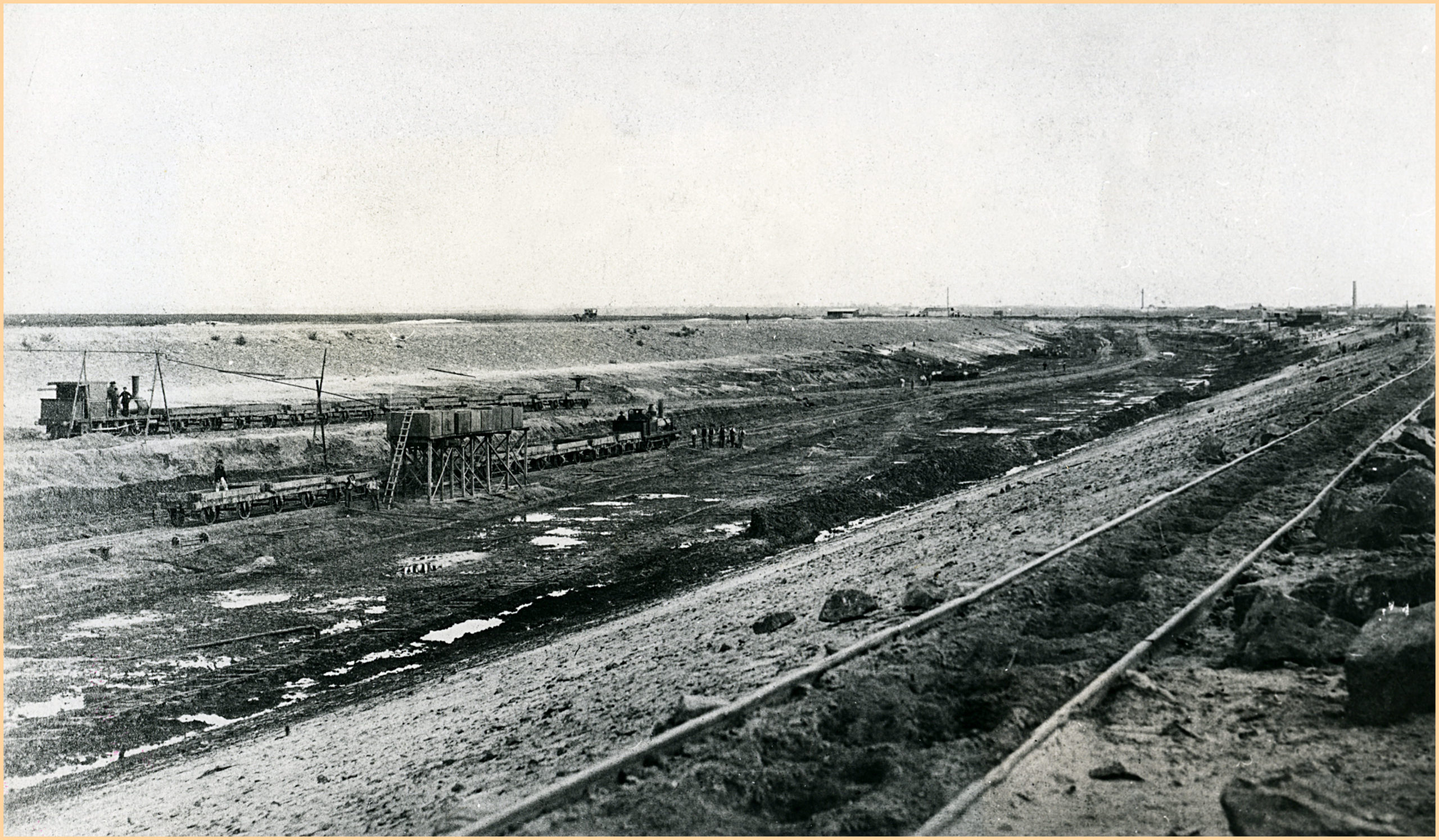
The Coode Canal, West Melbourne, under construction, West Melbourne, c.1885.
Royal Historical Society of Victoria Collection, MAR-109
The Coode Canal under construction, showing work trains in the area being dredged.
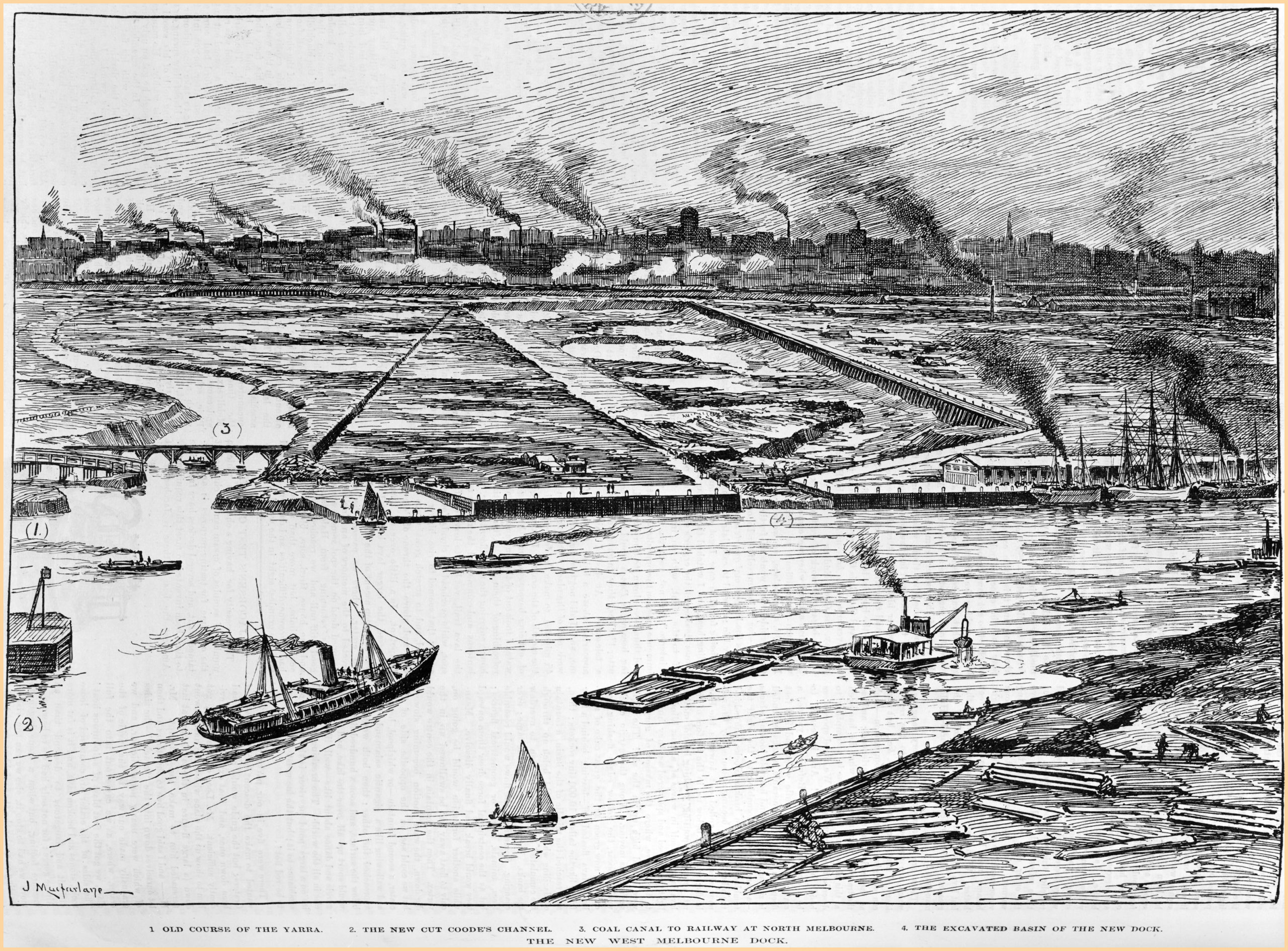
New West Melbourne Dock, J MacFarlane, 1892. Illustrated Australian News (Melbourne, Vic.: 1890 – 1896) 1 April 1892, p 12
The etching shows 1 Old course of the Yarra; 2 The new cut Coode’s Canal; 3 Coal Canal to railway at North Melbourne; 4 The excavated basin of the new dock.
 239 A'Beckett Street Melbourne, Victoria, 3000
  03 9326 9288
  office@historyvictoria.org.au
  Office & Library: Weekdays 10am-4pm

